At a Glance
Best For
Overview
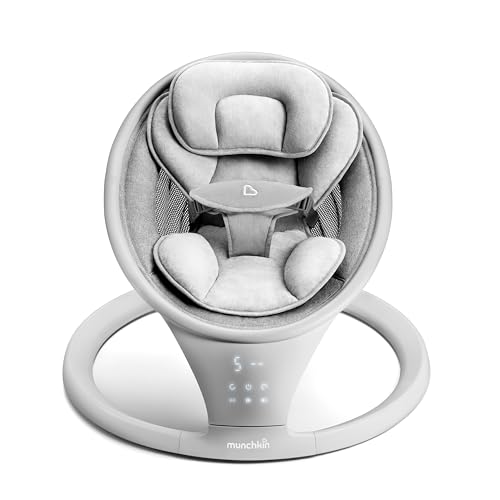
The Munchkin Vibration Baby Swing is the one-trick-extra version of the standard Munchkin Bluetooth swing. The motion, the build, the two-piece breakdown, the Bluetooth streaming, the smooth side-to-side sway — all identical to its sibling. What changes is the addition of three vibration modes that pulse the seat at different intensities, layered over (or independent of) the swing motion. For parents of colicky, refluxy, or gassy babies, those vibration modes can be the difference between a baby who finally settles and a baby who screams through the entire afternoon. For parents of typical babies without those issues, vibration is a 'nice to have' that doesn't justify the $15–$30 premium over the standard model.
Vibration's role in baby soothing has a long folk-medicine history that's been partially validated by clinical research. The classic move of putting a colicky baby on top of a running clothes dryer for ten minutes works because the vibration combined with white noise mimics the constant motion and humming of the womb environment. The Munchkin Vibration Baby Swing packages that effect into a product designed for the use case, with three intensity settings and the option to combine vibration with motion or run vibration alone in a stationary mode.
The critical question for any prospective buyer is: do you actually need the vibration, or do you just like the idea of it? This review walks through the real use cases where vibration earns its keep, who benefits from this product over the standard Munchkin Bluetooth, and where the upgrade is genuinely a waste of money. The short answer: if your baby has reflux, colic, or gas issues, this is the right Munchkin to buy. If they don't, get the cheaper one.
Pros & Cons
Pros
- Adds 3 vibration modes on top of the proven Munchkin sway motion — meaningful for colicky or refluxy babies who respond to vibration
- 100+ soothing combinations of motion, vibration, and sound
- Same Bluetooth audio and 2-piece breakdown as the standard Munchkin swing
- 12 sounds and songs (more than the base Bluetooth model)
- Same stable, smooth motion build quality as the rest of the Munchkin lineup
Cons
- Newer SKU — limited long-term durability data
- Vibration is a 'nice to have' for most babies, not a game-changer unless you have a colicky one
- $15–$30 premium over the base Bluetooth model
- Single-axis sway only — no multi-directional motion
- Vibration intensity differences between modes are subtle
Munchkin Electric Baby Swing with Vibration
Prices may change · Free shipping with Prime
When Vibration Actually Helps
Three specific baby-care situations make the vibration upgrade worth $15–$30 more than the standard Munchkin: colic, reflux, and gas. These are common conditions in the 0–4 month window — colic in particular affects roughly 1 in 5 babies — and parents dealing with them often try every soothing tool they can find before something works. Vibration has a real track record in this category.
Colic is medically defined as a healthy baby crying for more than three hours a day, three days a week, for three weeks or more, typically peaking at 6 weeks and resolving by 3–4 months. The cause is poorly understood but theories include immature digestive systems, gut microbiome differences, and overstimulation. Whatever the cause, gentle continuous vibration — the kind the Munchkin Vibration delivers at its lowest setting — has been shown anecdotally and in some small clinical studies to help colicky babies settle when motion alone doesn't.
Reflux is even more common and refers to babies bringing food back up after feeds. Babies with significant reflux often want to be held upright after eating, and putting them flat in a swing right after a feed can trigger spit-up or discomfort. The Munchkin Vibration's slight recline plus the gentle vibration helps some refluxy babies stay calm and upright-ish during the post-feed period, reducing crying and spit-up incidents.
Gas pain — the dreaded 'witching hour' fussing many newborns experience in the late afternoon and evening — responds to many of the same interventions that help colic. The vibration stimulates digestion gently and can help babies pass gas more easily, which often resolves the fussiness in 5–15 minutes. For these specific use cases, the Munchkin Vibration is meaningfully better than the standard Bluetooth model. For everything else, the two products are identical.
The Three Vibration Modes Compared
The Munchkin Vibration offers three distinct vibration modes, accessed through the touch screen panel or remote. Each is differentiated by intensity rather than pattern — the vibration itself is a continuous pulse rather than rhythmic — and the differences are noticeable but subtle.
Mode 1 (gentle) is barely perceptible to an adult hand placed on the seat — a soft constant pulse that babies seem to register without being startled by it. This is the right setting for true newborns, sleeping babies (during awake-time soothing only — never use any swing for sleep), or babies who are just slightly fussy and need a low-key extra layer of soothing on top of the swing motion.
Mode 2 (moderate) is the daily-driver vibration setting. It's clearly perceptible to an adult and produces the kind of pulse you can feel through the seat fabric. This is the right mode for active fussing, post-feed reflux soothing, and gas-related discomfort. Most parents who use the vibration daily report Mode 2 as their default.
Mode 3 (intense) is the strongest vibration setting and is appropriate for full-on colicky episodes where Modes 1 and 2 haven't worked. The intensity here is meaningful — the seat itself visibly vibrates — and it can be too much for some babies, who get overstimulated rather than soothed. We'd recommend trying Modes 1 and 2 first and only escalating to Mode 3 during difficult sessions where everything else has failed.
Vibration can be combined with any swing motion or speed setting, or run independently with the swing motor off. The 'vibration only, no swing' mode is useful for sleeping arrangements where you specifically don't want the seat to be in motion (note: the AAP and CPSC warnings against using swings for sleep apply regardless of whether the motion is on or off — vibration-only does NOT make the swing safe for sleep).
What's Identical to the Standard Munchkin Bluetooth
Critical to the value calculation: everything about the swing other than the vibration is exactly the same as the standard Munchkin Bluetooth model. The motion path, motor quality, and smooth side-to-side sway — identical. The five speed settings — identical. The Bluetooth audio streaming and onboard speaker — identical. The two-piece breakdown for storage and travel — identical. The wide stable base, weight (under 9 lbs assembled), and dimensions — identical. The 5–20 lb weight range and recommended age (birth to 9 months) — identical.
The Vibration model adds 12 sounds and songs vs the base model's preset library, but Bluetooth streaming makes that difference largely irrelevant — anyone who cares about sound options is going to stream from their phone anyway. The control panel on the Vibration model has additional buttons for vibration mode and intensity, but the layout and basic operation are familiar to anyone who's used the standard model.
This is genuinely useful information for parents weighing the two products. If you don't have a baby with colic, reflux, or gas issues, you're paying a $15–$30 premium for vibration modes you'll rarely use. The standard Munchkin Bluetooth gives you the same core swing experience for less money. If you have any uncertainty about whether your baby will have those issues — and many parents don't know until baby arrives — the Vibration model is the safer bet, since you can simply not use the vibration features if it turns out you don't need them.
Neither model is foldable in the traditional sense (they don't fold flat for travel), but both disassemble into two pieces. Neither rotates. Neither has app or voice control. Neither has a hanging toy mobile. They're functionally the same product with one feature added.
Who Should Buy This
Buy the Munchkin Vibration if your baby has — or you suspect they might have — colic, reflux, gas issues, or general fussiness that doesn't respond to motion alone. Buy if you're a first-time parent and want the version of the product that handles the worst-case soothing scenarios; the $15–$30 premium is cheap insurance. Buy if your older sibling had colic and you suspect the new baby might too. Buy if you've already tried a non-vibrating swing with a difficult baby and felt like something was missing.
Do not buy the Vibration model if you have a baby who already shows signs of being easygoing (sleeps well, settles quickly when held, doesn't have feeding issues). Save the money and get the standard Munchkin Bluetooth — you'll be paying for a feature you won't use. Don't buy if you specifically wanted multi-directional motion (vibration is not the same thing as multi-motion) — the Mamaroo or CocoSway address that need. Don't buy expecting the vibration to make the swing safe for sleep — vibration-only mode is still an inclined-seat product that should never be used for sleep.
The Munchkin Vibration is one of the most defensible 'upgrade' decisions in the baby gear world: a small price premium for a feature that's genuinely transformative for the babies it helps, and easily ignorable for the babies it doesn't. If you're already buying a Munchkin and have any uncertainty about your baby's temperament, the Vibration is the safer purchase.
Our Verdict
Worth the upgrade over the base Munchkin Bluetooth only if you have a baby with reflux, gas, or colic that responds to vibration. Otherwise, save the $15–$30 and get the standard model — the core swing is identical.
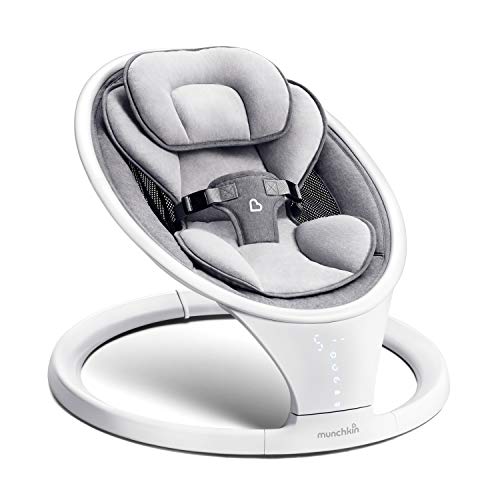
Munchkin Electric Baby Swing with Vibration
$185
Prices may change · Free shipping with Prime
| Full Specifications | |
|---|---|
| Motion Type | Side-to-side + Vibration |
| Weight Limit | 20lbs |
| Motion Patterns | 1 |
| Speed Settings | 5 |
| Power Source | Plug-in |
| Bluetooth Audio | Yes |
| App Control | No |
| Voice Control | No |
| Rotating Seat | No |
| Recline Positions | 1 |
| JPMA Certified | No |
| Foldable | Yes |
| Dimensions | 30" x 27" x 32" |
| Product Weight | 9lbs |
Frequently Asked Questions
Is vibration safe for newborn babies?
Does the vibration help babies with reflux?
Can I use the vibration mode without the swing motion?
Is the Munchkin Vibration worth $15–$30 more than the standard Munchkin Bluetooth?
Compare With Similar Baby Swings
Ingenuity
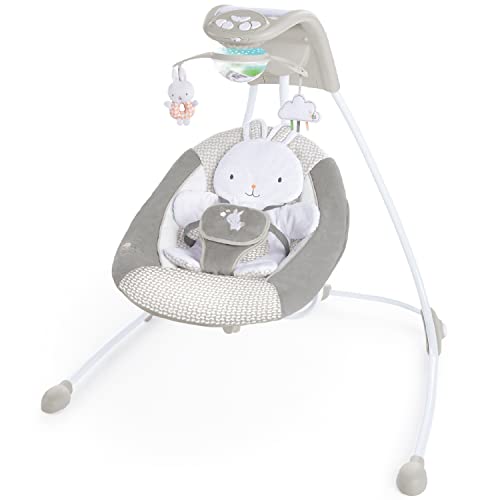
InLighten 6-Speed Foldable Baby Swing
Front-to-back or Side-to-side (Swivel) · 20 lbs · 2
$150
Head-to-Head Comparisons
Munchkin Electric Baby Swing with Vibration
$185
Prices may change · Free shipping with Prime